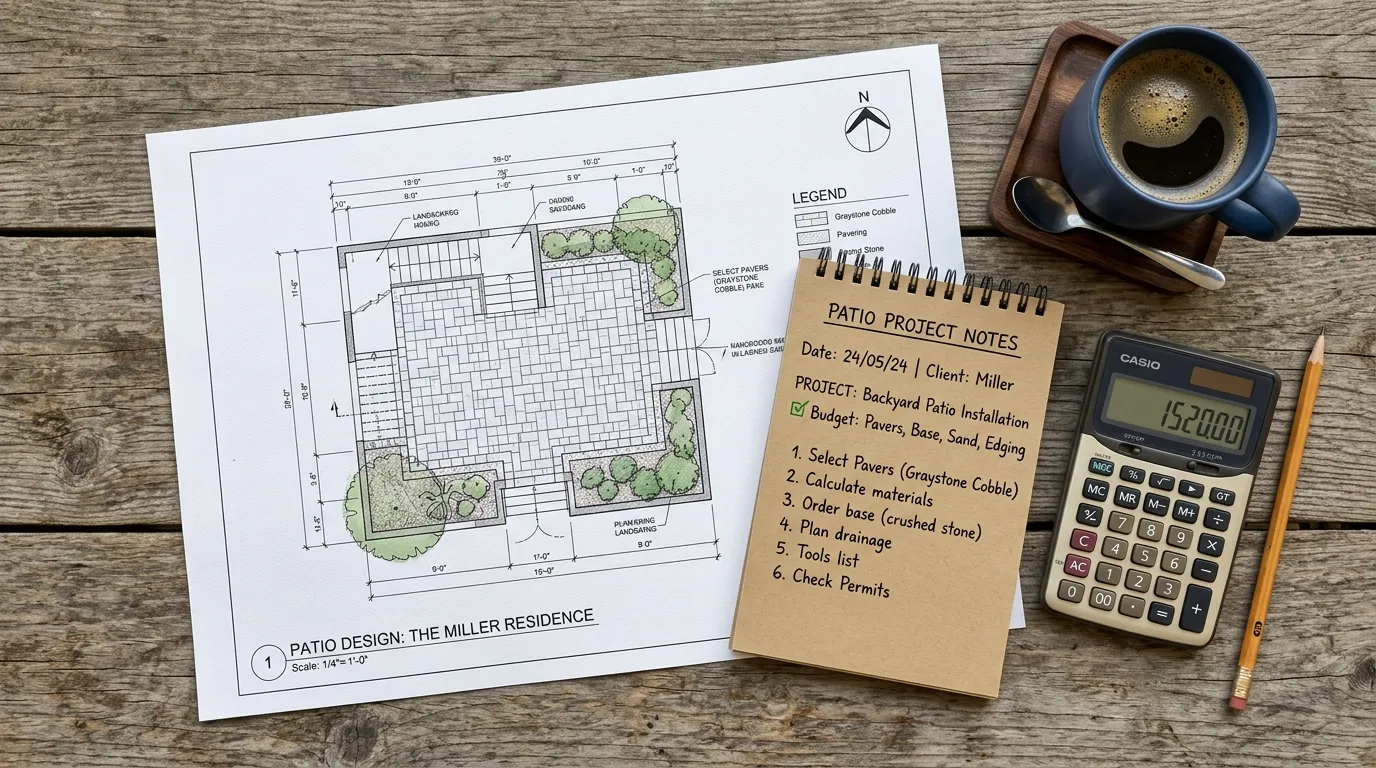
Planning a paver patio usually starts with the same question: how many pavers do I buy, and what on earth is this project going to cost? That is exactly what this site exists to answer. The free paver patio calculatorbelow is not a single number generator. It is a full project planner that works in feet, meters, yards, or centimeters and prices materials across seven currencies, so the plan matches your yard and your local hardware store — not a generic American average.
Whether this is your first DIY paver patio or a redo of an older walkway, the tool walks you from raw dimensions all the way to a ready-to-order shopping list: pavers and pallets, crushed-stone base in cubic yards and tons, bedding sand in bags, polymeric joint sand, edge restraints, geotextile fabric, and a paver patio cost comparison between doing it yourself and hiring a contractor.
Get an Exact Paver Count Before You Order a Single Pallet
Every paver patio project needs a paver count, and that count changes with every format. A brick paver patio built with classic 4×8 brick pavers takes a different quantity than a large-format slab in the same footprint. Enter your patio size and paver format and the calculator returns the exact number of pavers, the number to order with waste allowed for, and how many full pallets that works out to — the number that keeps you from making a second trip or being stuck with a pallet of leftovers.
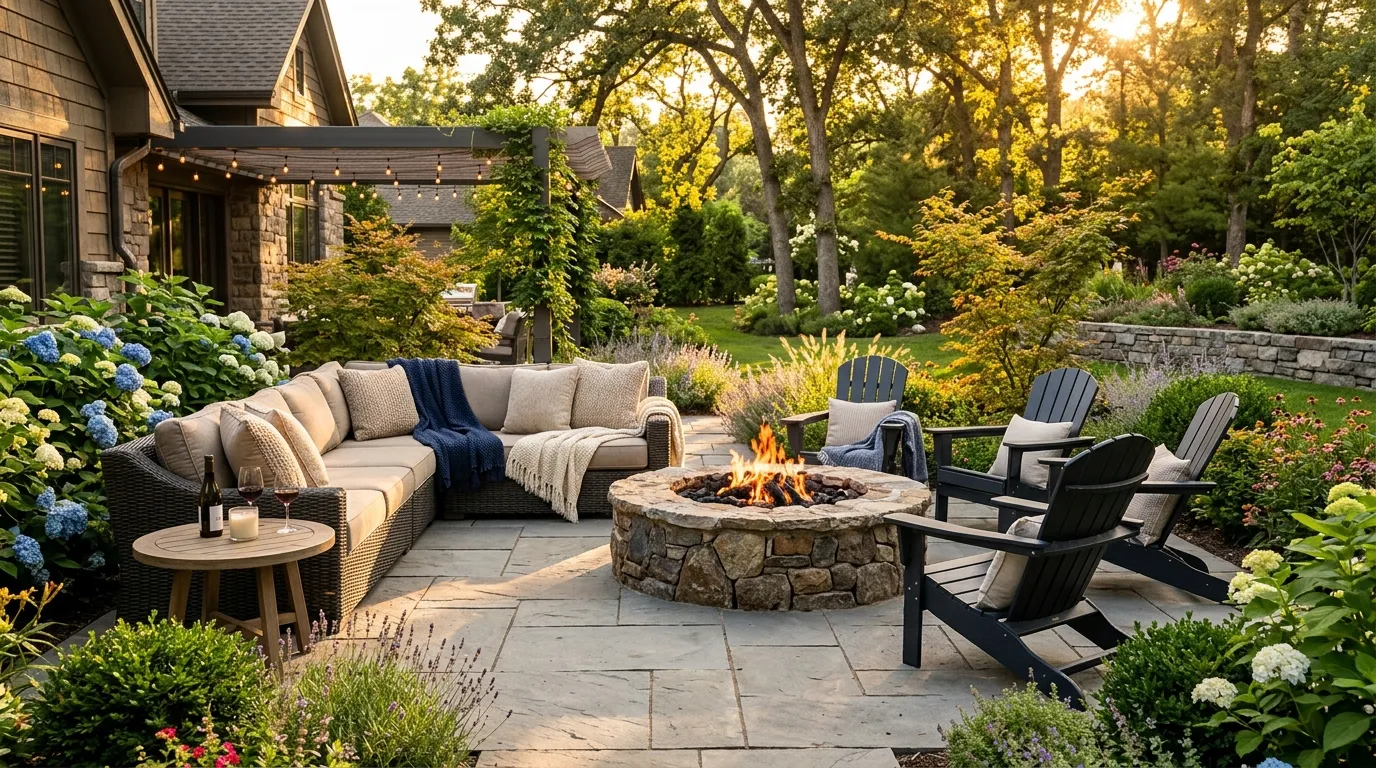
The same paver counterhandles round and circular layouts, rectangular patios, planter borders, and raised pads, so a curved fire-pit sitting area or a 16×16 square patio gets the same precision as a simple rectangle. That is the whole point: the math should be done before the money is spent, not after the supplier has already asked how many tons you want.
Base Gravel and Sand — the Quiet Half of the Job
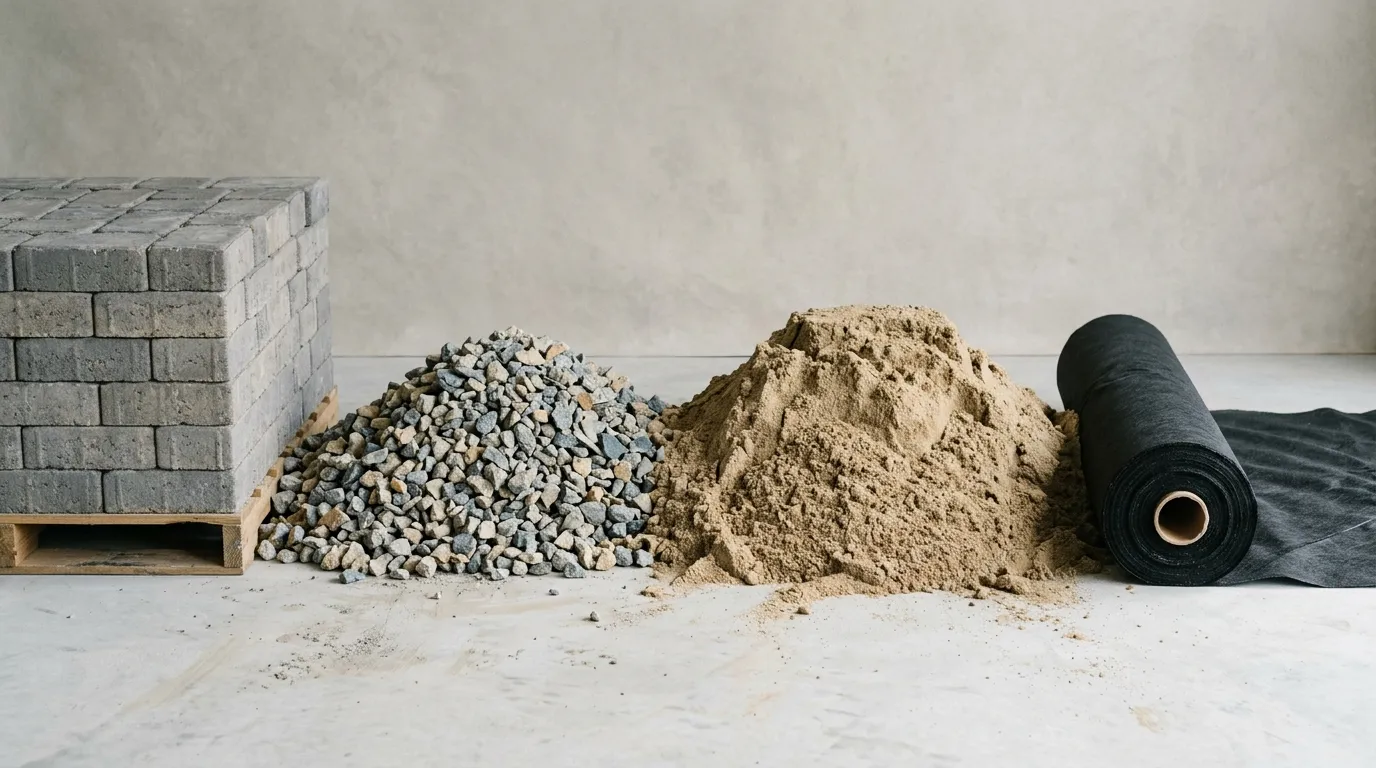
The most expensive mistake in a paver patio installation is a soft base. If the crushed-stone underlayment comes up short, pavers settle, edges creep, and within two seasons the project looks like a wave. The gravel and sand calculatorconverts your patio area into the cubic yards of base stone you need — with compaction accounted for — plus the tonnage, how many 12-ton loads that is, and the number of 50 lb sand bags for the bedding layer. Pair it with thepaver materials guideand you will know exactly which aggregate spec to order.
Honest Paver Patio Costs: DIY vs. the Quote
Budgeting is where most plans fall apart, so thepaver patio cost estimatorcovers both sides of the question. It totals every material for your exact size, then compares that against a professional contractor quote for the same footprint, including your own hourly labor rate if you are doing the work. The result shows what you can genuinely save by installing it yourself and what the realistic installed paver patio cost per square foot looks like in your area. There are no ads, no affiliate links inflated into the math, and no "typical project" averages hiding the real number for your size.
Patterns, Ideas, and Designs to Match the Math
Once the numbers are settled, the fun half begins. A patio paver project is as much about the pattern as the pavement, and the wrong choice is hard to un-see. Thepaver patio ideaslibrary covers the classic herringbone pattern, the staggered look of running bond, the natural-stone feel of ashlar, basketweave, geometric layouts, interlocking grids, and fire-pit patios. Each idea page shows real photos, per-square-foot costs, difficulty, and recommended materials — so you can pick a design that fits your yard and your wallet before one brick is moved.
Would a classic patio paver pattern or a more modern patio paver designsuit your yard better? For a brick paver patio, running bond and herringbone are the workhorses; for large-format concrete pavers, geometric and ashlar read cleaner and more contemporary. The idea pages explain both the look and the labor so the choice is informed — and the calculatorwill happily price whichever one you pick.
Step-by-Step Paver Patio Installation Guides
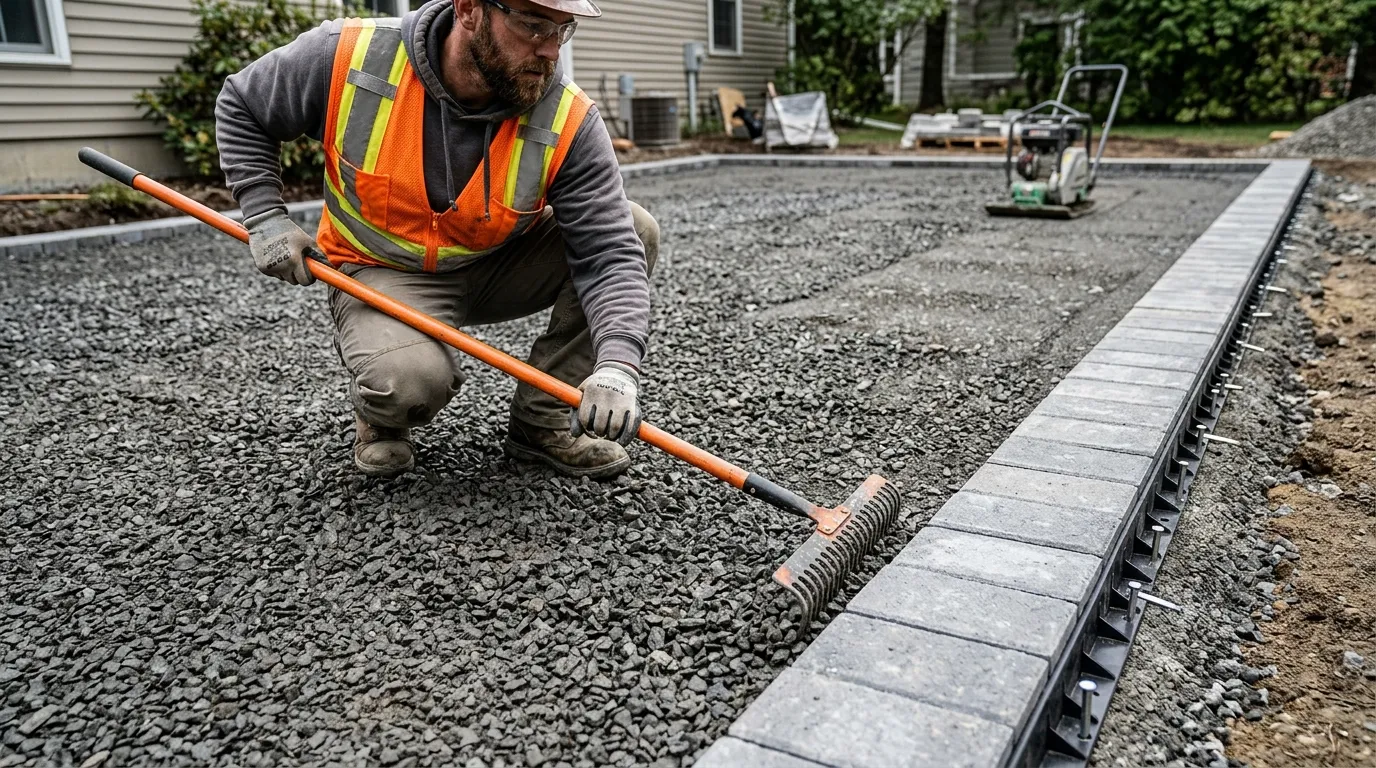
A calculator is only as good as the hands using it. The10-step paver patio installation guidetakes the numbers and turns them into the build: setting your layout and batter boards, excavating to the right depth, compacting the crushed-stone base in lifts, screeding the sand bedding, laying and tapping pavers, filling joints with polymeric sand, and finishing with a walk-behind plate compactor. Between the guide and the calculators, a first-time paver patio installation becomes a sequence of known quantities instead of a guessing game.
Stuck at any point? The FAQscover rocking pavers, polymeric haze, drainage slope, weeds, and sealing — the failure points people hit most often. If you are budgeting the whole project, thepaver patio costpage breaks down materials and labor by pattern so there are no surprises at checkout.
All of it is free, ad-free, and signup-free — no email walls, no paywalled tools, no "enter your details to see the answer." Enter your dimensions, and the numbers you need are on screen in seconds.